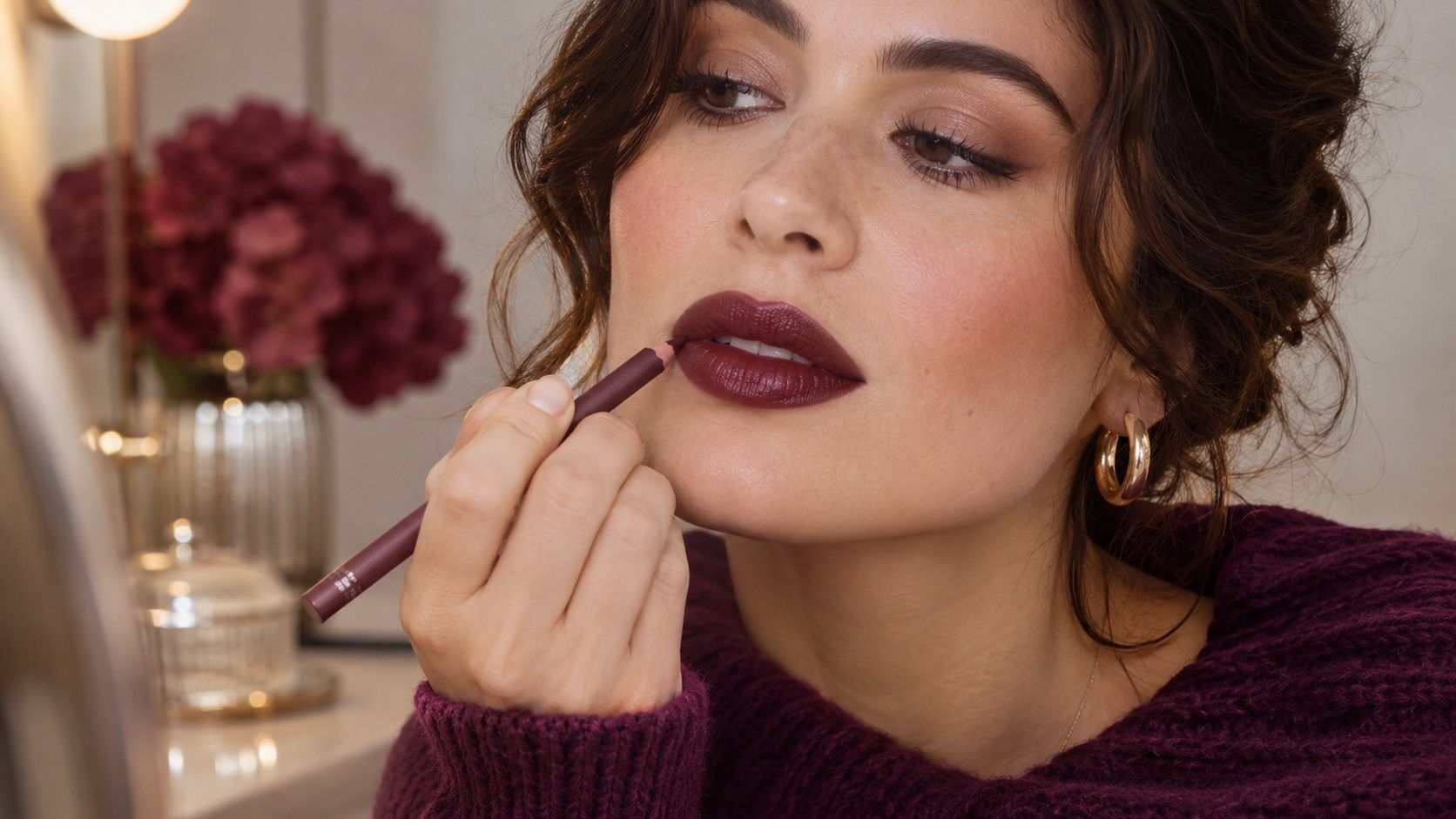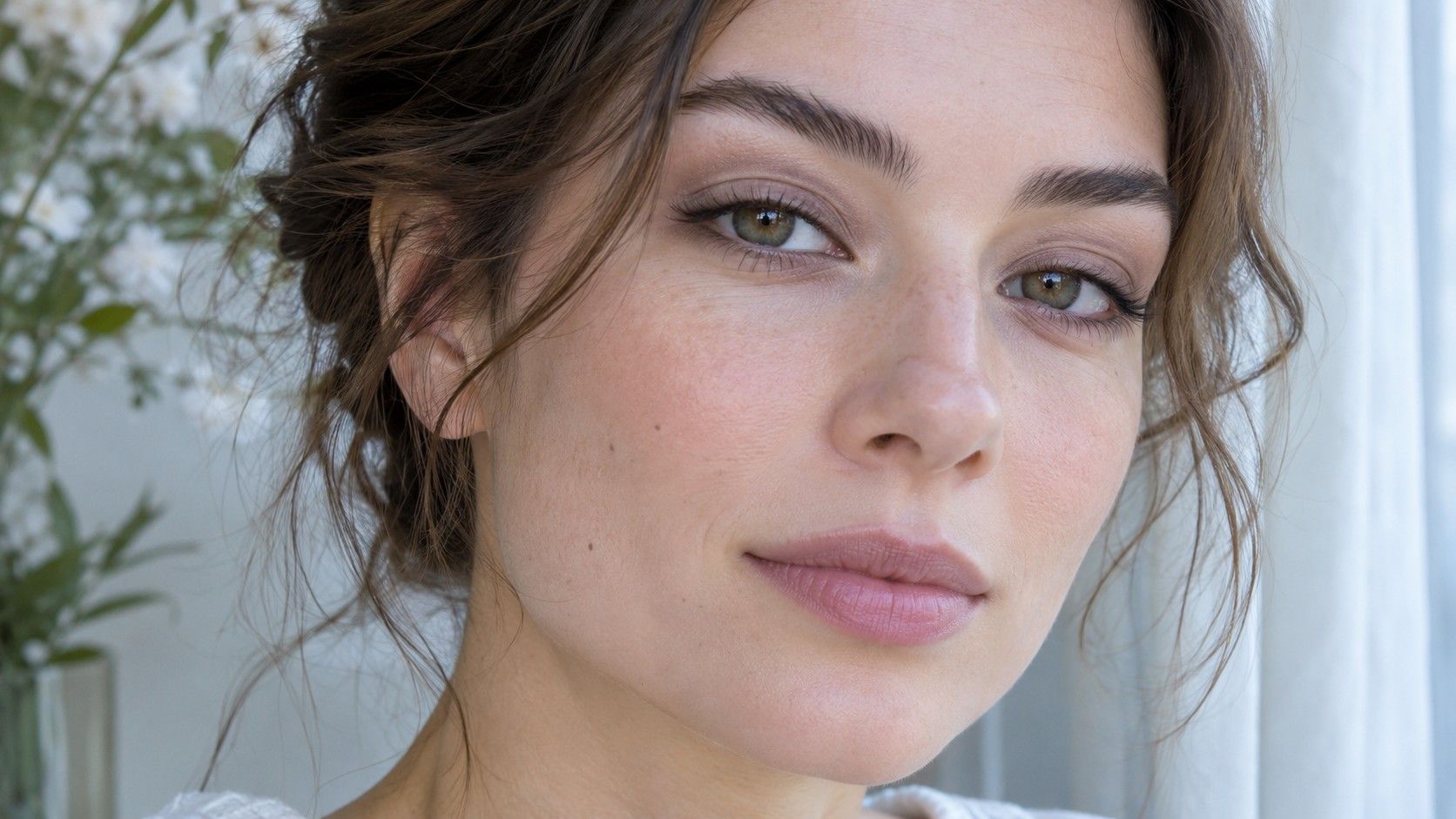
A soft eye look can disappear when you step away from the mirror. The obvious response is to add darker shadow everywhere, but that can leave you with more makeup and no clearer focal point. For Cool Summer eye makeup, try locating the one edge you want to emphasize before changing the whole palette. A narrow lash-line accent or a little depth at the outer corner may give you the definition you wanted while leaving most of the lid light and simple.
Identify the one edge that needs definition
Begin with the face you normally wear, including your familiar base and brows. Look straight ahead with your eyes open, then look at a slight angle. Are the upper lashes hard to distinguish from the lid? Does the outer corner lose shape? Or do you simply want the makeup color itself to be more visible? Those are different jobs. An all-over wash adds color, while a small darker mark near the lashes creates a more specific boundary.
Choose one job for the first comparison. For example, keep a light taupe wash on the lid and add a little depth only along the outer part of the upper lash line. Leave the lower lash line and crease alone until you have looked at that change. Otherwise a darker crease, lower line and outer corner can arrive together, and you will not know which part helped or which made the eye area feel crowded.
There is no required eye shape for this approach. The amount of lid visible with your eyes open affects where the accent can be seen, so judge the mark in that position rather than only with an eyelid stretched closed. Work with the visible space you have. A tiny line that disappears into a fold may need a different placement, not a darker color spread across the entire lid.
Try a narrow line before darkening the whole lid
Use an eye product and applicator intended for the area, in the way their instructions describe. A pencil you already know or a shadow with an appropriate brush is enough for a comparison. You are not trying to make every gap vanish or to place product inside the eye. Keep the experiment on the external lid and stop if the product is uncomfortable. Changing a makeup look should not mean improvising with an unsuitable product.
Make a short, narrow accent along part of the upper lash line, then soften the edge a little if the product allows it. Look with both eyes open before extending it. A continuous heavy band is not the only way to describe an eye. For a quieter result, the outer portion can carry most of the depth while the inner part remains relatively light. If that feels incomplete, lengthen the line gradually rather than immediately increasing its width.
Keep mascara familiar during this check. A fresh heavy coat can make a subtle line seem unnecessary, while no mascara can make you ask the shadow to do a job your usual lashes already handle. Neither arrangement is wrong. The point is to avoid changing both at once when you want to learn what the line contributes. Judge the combination you are likely to repeat on an ordinary morning.
Separate cool gray from flat gray
Cool Summer suggestions often lead to gray, taupe and muted mauve, but those words cover many appearances. A taupe shadow may lean more brown or more violet. A gray can be pale and reflective or deeper and matte. Before rejecting a color family, ask whether the product lacks the depth you wanted, blends into a similar-looking base, or has a finish that makes it appear lighter when light hits it.
Try one of those changes at a time with products you own. A slightly deeper gray placed narrowly near the lashes is a different experiment from a wider layer of the original pale gray. A soft brown-gray may also be a useful comparison if it looks pleasing with your face. You do not need to exclude it because its name sounds warmer. The names on pans are imperfect descriptions, and seasonal systems do not turn them into exact specifications.
Do not chase a perfectly neutral gray in a photograph. Your camera may alter exposure and color, and the surrounding lid, clothing and room light influence what you notice. Look at the full face in a familiar mirror, then turn slightly so reflective shadow is not always catching the same light. If the shade looks good in motion but odd in one still image, that is a reason to be cautious about the image, not proof that your season label has failed.
Compare the lid with the rest of the face
Step back once the accent is visible. Can you still see a light area on the lid, or has every part become a similar depth? A small difference between the lash line and the area above it can be more legible than adding dark product to both. If the eye looks heavy, remove or reduce one element before making another edge sharper. Lower-lash shadow is a useful candidate to leave out during this first simple trial.
Check the brows and lips as context rather than as faults to fix. A strongly drawn brow, a dark lip and a dark lower line can make a modest upper accent look like part of a much stronger face. If that is your intended look, keep it. If you wanted quiet everyday definition, compare the eye with your usual lip and brow routine first. You can build a more dramatic combination another day without confusing the two decisions.
View the result under the conditions that matter to you. Indirect daylight helps you see transitions, while an evening room may make a narrow line look less distinct. A desk lamp immediately above the mirror can cast shadows that are not part of the makeup at all. Move away from that position before adding more product. If you want an evening version, make a small deliberate adjustment and keep it as a separate version rather than judging the day look by a different task.
Keep a simple version for daily wear
Once you find a useful accent, reduce the routine to a few repeatable actions. You might keep a light wash, a short outer upper line and your usual mascara. Another person may prefer no lid wash at all, just a softened pencil and lashes. Describe what each step contributes. If the wash adds no color or finish you enjoy, it does not need to stay merely because a tutorial included it.
Make a short note about placement and product, not a rule that every Cool Summer must follow. “Taupe over the visible lid, gray only at outer upper lashes, no lower line” is a workable reminder. If the products blend differently after you change your base, reassess the application rather than assuming the original choice was wrong. Small everyday differences in finish and amount can change how the same shade reads. Keep the comparison to the same two products for a few wears instead of opening a new palette every morning.
Give the look a normal day before adding more detail. You may discover that the part you notice most is the softness of the edge, or that a slightly stronger line saves time compared with several layers of shadow. Keep the version you can apply comfortably and like in ordinary settings. Definition is a matter of placing emphasis where you want it; it does not require making every boundary around the eye equally dark.