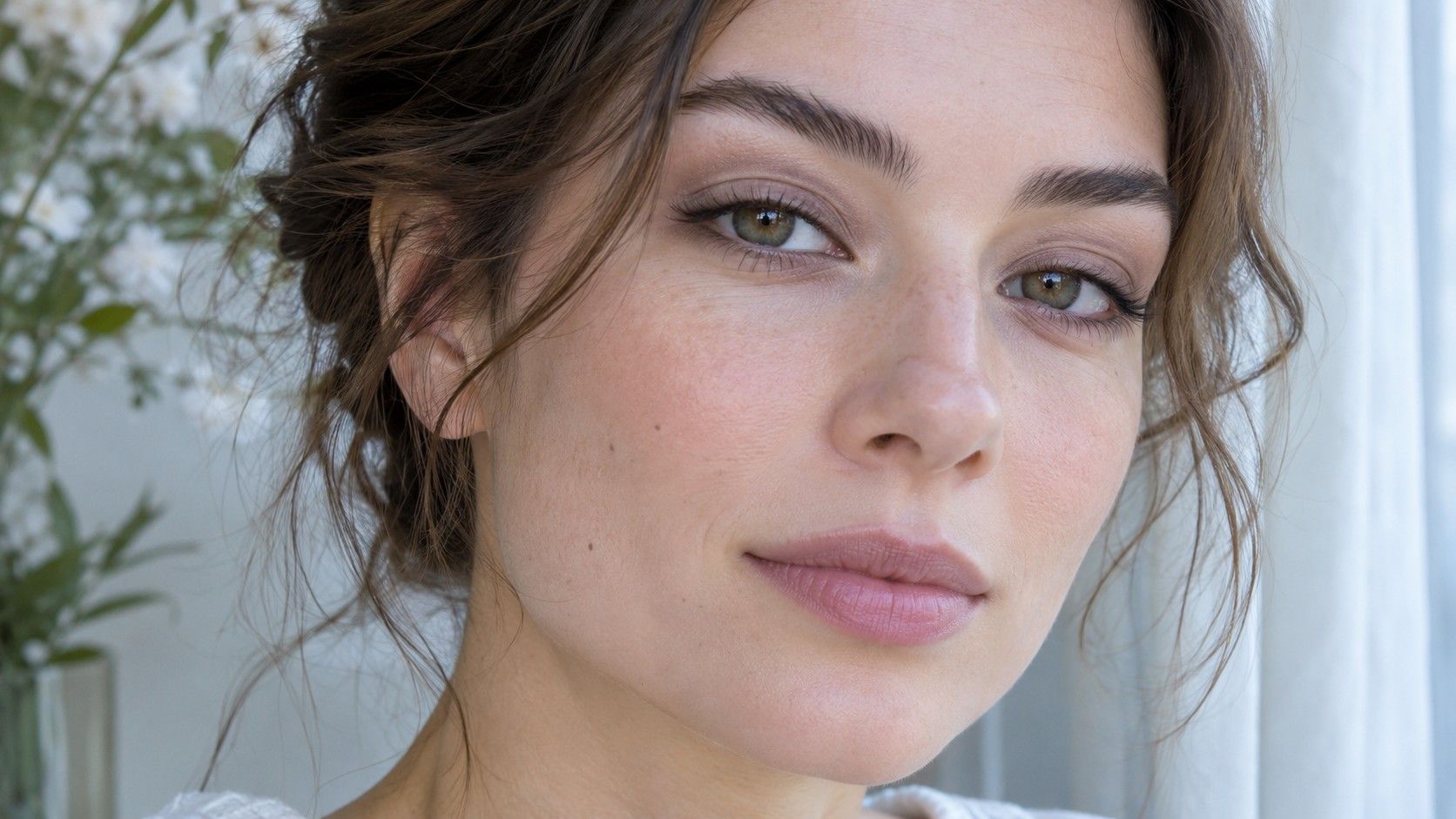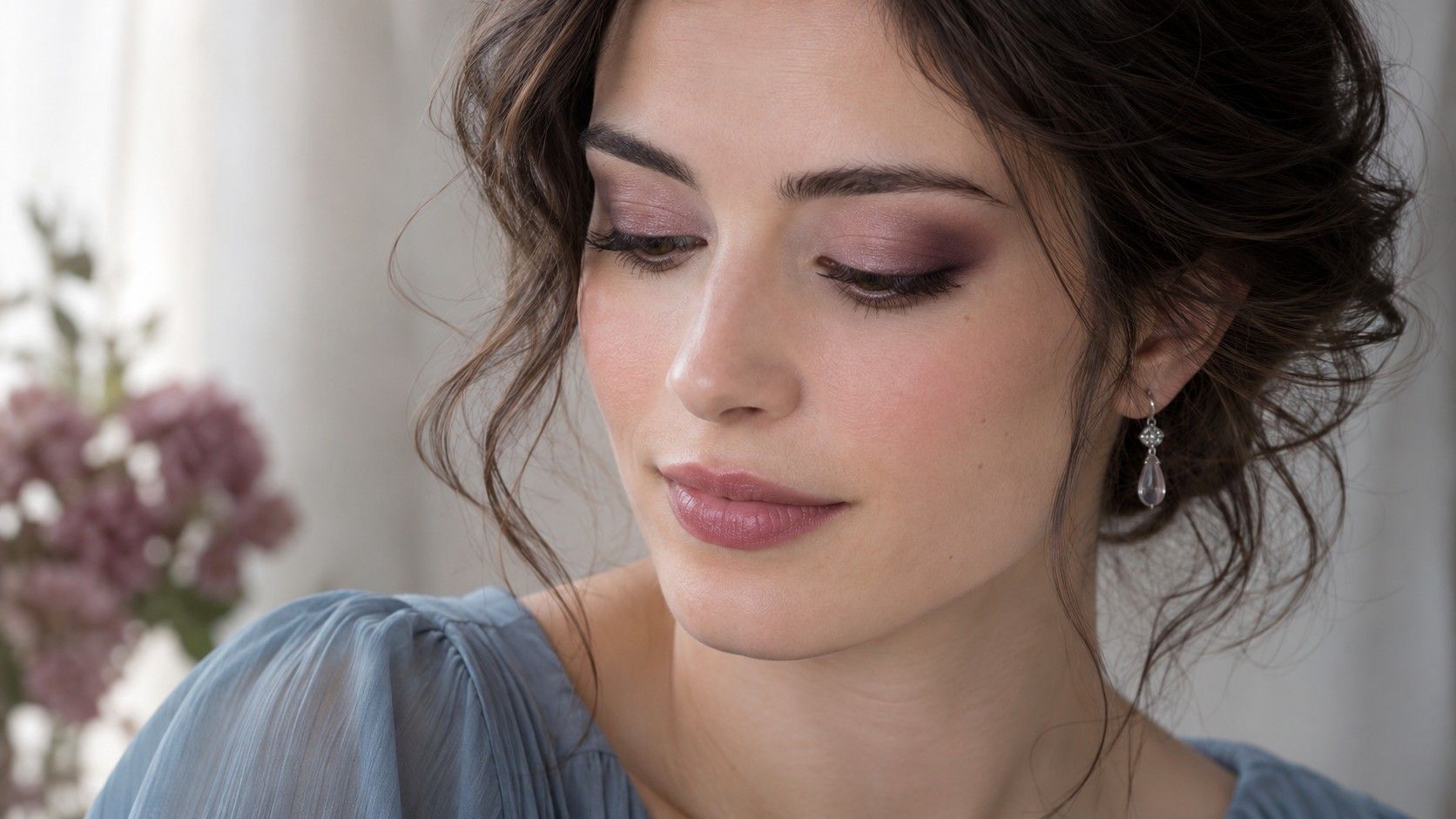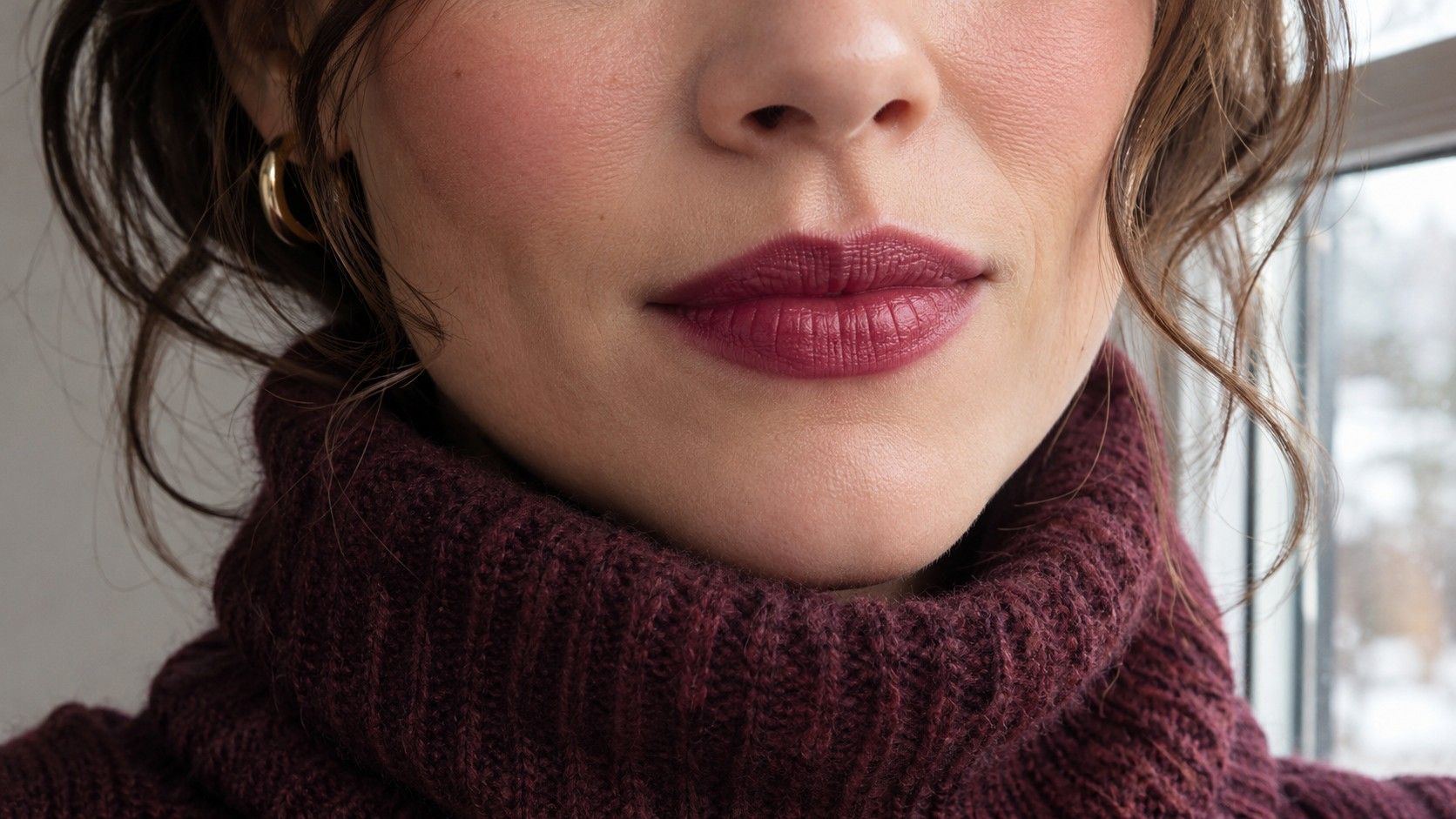
A lipstick can be the right kind of berry for your taste and still look much stronger than you want at breakfast. That does not make the tube useless. If a Deep Winter palette is your starting reference, try changing how much of your own lip shows through before shopping for a paler color. A sheer berry, a fully covered berry and the same berry with a softly pressed edge are three different-looking choices, even though they came from one tube.
Start with a lipstick you already tolerate
Choose a product you already use comfortably and whose color you can see clearly. There is little to learn from adding an unfamiliar formula, a new base and a different mirror to the same experiment. Set aside a few minutes when you are not rushing out of the house. Start with clean lips and the usual preparation you would actually use on an ordinary day. A heavy glossy balm underneath may change the finish and how evenly the pigment sits, so keep it consistent between attempts.
You do not need to prove that the product belongs to Deep Winter. Seasonal labels are styling suggestions, and makeup cannot establish a season. The useful question is smaller: can this particular lipstick give you an everyday look you enjoy without needing several corrective products? Keep a plain tissue and a mirror nearby, and use the same light for each application.
Keep the hue while changing application weight
Begin with a light application straight from the product, or use a clean lip brush if that gives you more control. Press the lips together gently, then look before adding more. If you prefer to blot, press a tissue against the lips rather than rubbing back and forth. Rubbing can remove the center unevenly and leave a darker perimeter, which makes it harder to judge the amount of color you intended to wear.
Then try the same product at its normal fuller coverage. Remove the first application before starting again if you want a clearer comparison. A stain may remain after removal; if it does, record that limitation or compare on another day instead of pretending the second application began from bare lips. Some formulas build smoothly, while others become patchy when spread too thinly. If a sheer application fails because the texture breaks apart, that is a practical limitation of the formula, not a verdict on the shade.
Less coverage does not simply produce a miniature version of the full color. Your natural lip pigment participates in the result. A thin plum can look rosier on one mouth and deeper on another. Treat the appearance you see on your own lips as the relevant comparison, rather than expecting the tube or a hand swatch to predict it exactly. A warm beige sweater close to the face may also affect the overall impression, so keep the clothing the same while making the first decision.
Compare the edge as well as the center
A small amount of pigment in the center with a dark leftover outline can still read as a highly defined lip. Check the corners and the border after blotting. If the boundary looks heavier than you want, use the clean part of your brush to distribute the existing product inward, without extending the lip shape. The aim is not to make the edge disappear. It is to avoid accidentally keeping the strongest part of the application when your intention was to soften the whole look.
Now step back to ordinary conversation distance. A close mirror is useful for spotting an uneven corner, but it exaggerates details that may not matter in the full face. Ask whether the lips look like a comfortable focal point or whether you keep staring at a narrow ring around them. If a fuller coat is even and a lighter coat is irregular, fuller coverage might actually be the easier option, despite being visually bolder.
Keep liner out of the first comparison unless you always need it for the way you wear this product. Adding a new outline can change depth and apparent shape at the same time as opacity. If you do use liner, repeat the same placement with both applications and name it in your note. Otherwise you may credit the thinner lipstick for a difference produced by the outline.
Choose a practical daylight version
Look in gentle daylight without placing yourself in a beam of direct sun, then check the indoor light where you spend much of the day. You are choosing an application for a real setting, not finding a universally correct lighting condition. A light coat that feels balanced beside a window may look barely present under warm dining-room lamps. You can keep both observations without forcing one to cancel the other.
When you search for everyday lipstick for Deep Winter, the word everyday deserves attention. For one person it means a clear lip with a bare eye; for another it means a quick wash that can be refreshed without a mirror. Try the application with your normal glasses, face makeup and work clothes. Resist adding stronger blush simply because the fuller lip made the rest of the face seem quieter during the experiment. That would turn a focused comparison into a complete makeup redesign.
Wear your preferred version for an ordinary activity before keeping it as your default. After a drink or a meal, look at where the pigment remains. A sheer layer may be easy to reapply, but it can also leave an outline if the center wears away. A fuller coat may hold its shape better or may require more attention. Keep the version you can maintain, even if the other one looked tidier immediately after application.
Keep one heavier option without calling it a new season
If both applications work for different purposes, keep a short instruction for each. For example: one light pass, soften corners, no liner for daytime; normal coverage with an even border for an evening meal. Those are usable notes you can repeat. A photograph may help you remember, but the camera can alter exposure and color, so do not use two differently lit selfies as proof that one application is objectively better.
If neither application is comfortable, stop layering. You may dislike the color, the texture, the finish or the amount of maintenance, and you do not need to identify a single grand reason before setting the product aside. Trying a different shade is reasonable after you have seen what coverage can and cannot change. Avoid buying several nearly identical tubes just to rescue one that always needs work.
A bolder lip for dinner and a lighter lip for errands do not require two seasonal identities. The more useful outcome is a small range of applications that fits your preferences. Keep the hue when you like it, change coverage when that solves the actual problem, and let an ordinary day decide whether the result earns a place in your makeup bag.
Make the comparison easy to repeat rather than turning it into a daily project. Keep the lipstick, the same brush if you used one, and a note about the number of passes together. If you find yourself repeatedly fixing a thin layer while the normal coat goes on evenly, use the normal coat on the days it suits you. Convenience is part of everyday makeup, not a compromise you need to apologize for.