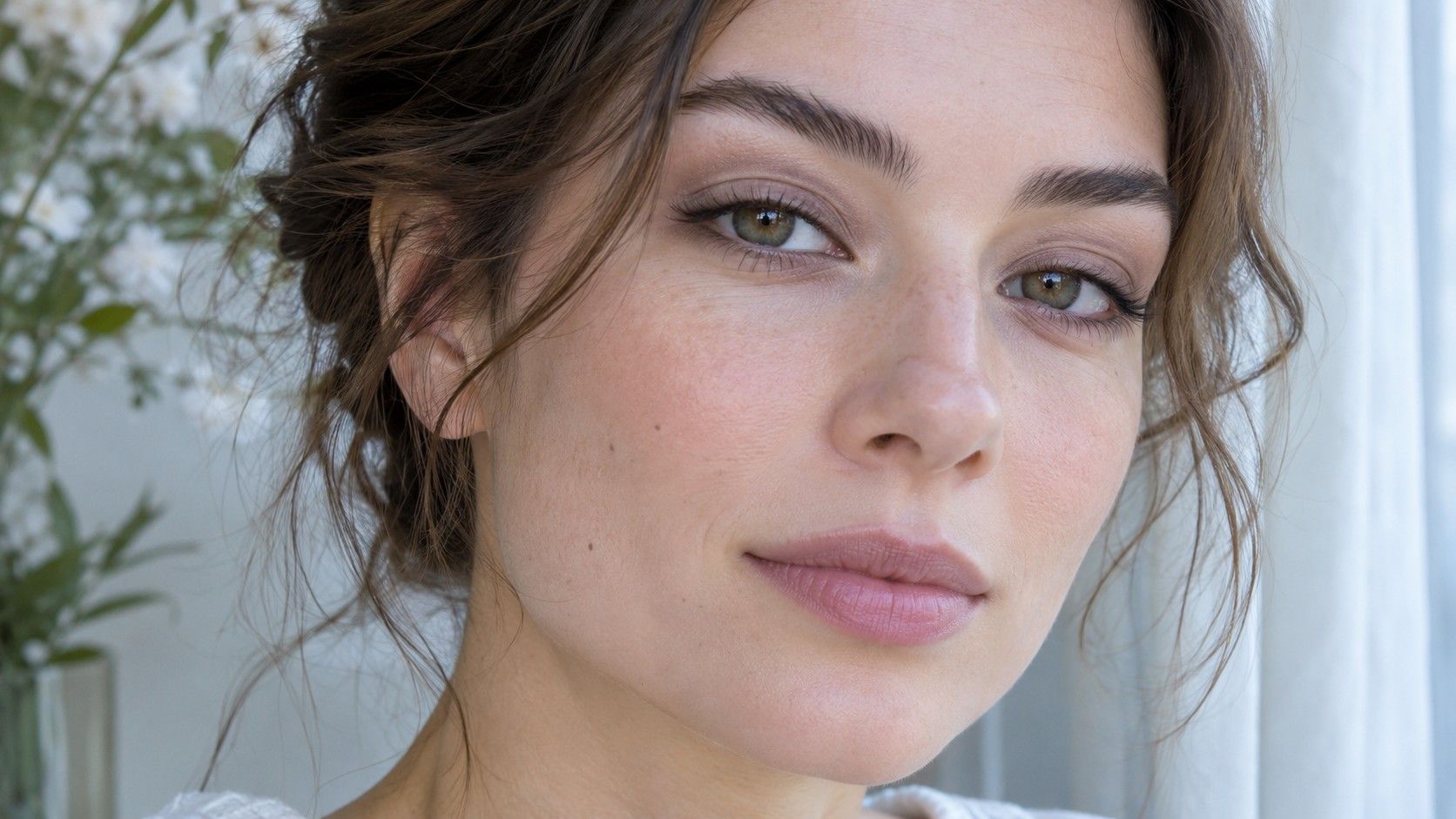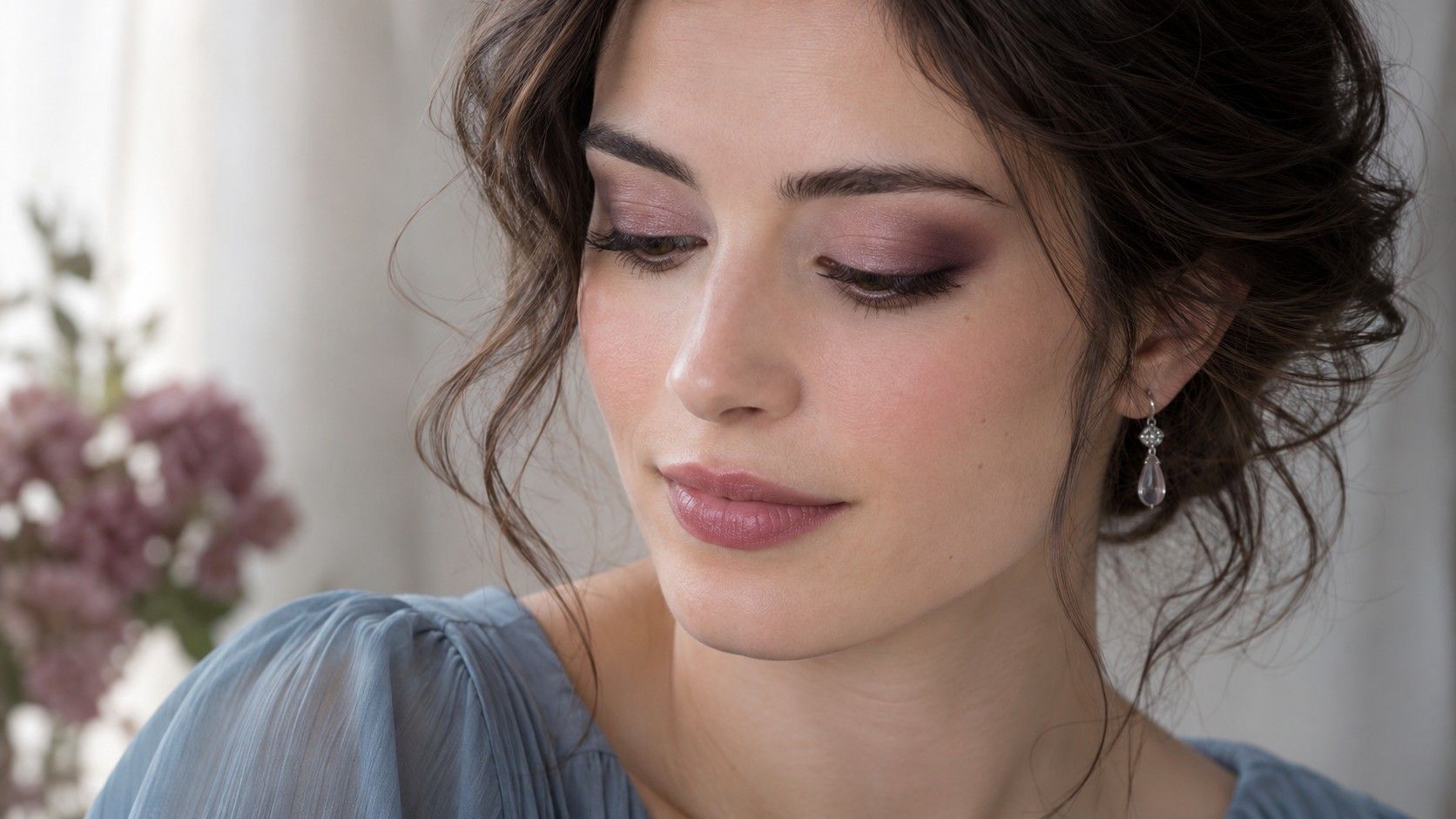
A nude lip is supposed to feel easy, yet a pale beige can leave you adding liner, gloss and blush just to feel like yourself again. If you use Deep Winter as a styling reference, you do not have to interpret nude as the lightest color on a shop display. Start with a neutral that makes sense against your own bare lips. It can be a muted rose, a quiet plum or a restrained brown-pink without becoming a statement lip.
Compare the candidate with your bare lip
Before applying anything, look at the natural depth of both lips in a mirror. The upper lip may appear different from the lower, and the border may already have more definition than the center. Those differences matter when you judge a product that partly covers them. You do not need to name an exact undertone or select a season to make this observation. You are simply establishing what the new color will replace or show through.
Try a product you already own before building a shopping list. Keep your ordinary base makeup and choose a familiar light. A hand swatch can help identify which tube you picked, but it cannot reproduce how that tube looks over your lip pigment. Put the candidate on the lips and compare the full face at normal mirror distance. Decide whether you want a quiet natural-looking lip or a deliberate pale-lip effect; those are different goals, and neither has to be disguised as the other.
Separate lighter color from lower opacity
A light shade applied opaquely and a deeper shade applied thinly may both appear understated, but they do different things. The first covers more of your natural lip color with a lighter surface. The second leaves more of that natural color visible. If pale lipstick seems to remove the mouth from the face, a quieter application of a slightly deeper neutral may preserve the sense of depth you wanted without looking bright.
Compare one change at a time. If you have two familiar candidates, choose one close to your bare lip depth and one noticeably lighter, then apply each in the way its formula behaves well. Do not force an opaque formula into an uneven stain just to claim a fair comparison. Clean away the first product as well as you reasonably can before the next test. If a stain remains, leave the second candidate for another day rather than treating the remaining pigment as part of its own color.
Finish is another separate variable. A glossy neutral can catch enough light to look lighter in a particular mirror, while a matte version may appear more solid. Neither effect tells you what a seasonal palette requires. If you are deciding between two depths, keep the finishes similar where possible; if you cannot, acknowledge that you are choosing a complete product rather than isolating a color property. A useful purchase decision can still be imperfectly controlled.
Look for a lost edge without drawing a new mouth
When the candidate is on, check whether you can still see where the lip ends without leaning into the mirror. A soft border is not a flaw, and not every face needs a sharp outline. The problem is practical only if you dislike the result or feel compelled to reconstruct a shape that was visible before. Check the corners as well as the center, because pale pigment collected at the corners can look heavier than the rest of an otherwise light application.
If you usually use a lip pencil, try a light touch that follows the existing border rather than drawing a new outline outside it. Choose a familiar pencil that relates to your natural lip color or to the lipstick, then see whether the transition remains gradual. A distinctly dark ring with a pale center is a particular makeup style. It may be exactly what you enjoy, but it should not become an accidental repair every time you wanted a simple neutral lip.
Stop after one small adjustment and step back again. If the liner has become the main visible color, you are assessing a combination, not the lipstick on its own. Keep that combination if it is convenient and you like it. If the goal was a single-product routine, however, a neutral with a little more depth may be a better fit. The easiest solution is sometimes choosing a different starting point instead of perfecting a complicated correction.
Test the whole face before adding another layer
A nude lip beside unfinished eye makeup can look different from the same lip with the mascara and glasses you wear to work. Complete your normal routine before deciding that you need more color everywhere. A lipstick should be judged in context, but that does not mean building a special routine solely to justify it. Use the level of eye and cheek definition you actually enjoy on an ordinary day.
Check the candidate with the neckline you plan to wear. A pale grey jumper and a dark navy shirt can create different surrounding contrasts, even though your lips have not changed. If the lipstick works with one outfit and not the other, write that as a useful boundary. You do not need to rename your season or insist that a neutral must suit every piece of clothing to earn its place.
Photographs can help you remember a comparison, particularly if you tend to forget why one candidate felt easier. Keep the position and light similar, and avoid treating phone images as a precise color record. Automatic exposure, processing and the screen can all affect what you see. Give the ordinary mirror view and the experience of wearing the product more weight than an isolated selfie in which the face looks unusually pale or warm.
Keep a usable neutral rather than chasing a universal nude
For nude lipstick for Deep Winter, a useful reference is the quietest lip you still like on your own face, not a compulsory beige formula. A muted rose might fit that description for you. Another person using the same seasonal label may prefer a soft plum or a deeper brown-pink. The shared label does not erase differences in natural lip pigment, preferred contrast, texture or the way a product wears.
Try the chosen neutral through a normal drink and conversation before making it the default. Check whether the remaining color is even enough that you can refresh it quickly. If the lipstick looks lovely at first but leaves a pale patch or a heavy border that bothers you, that is relevant information. Do not turn wear behavior into a claim about your undertone. It may simply mean that this formula or application is more work than you want.
Keep a short practical note: one pass, pencil optional, better with navy than a pale neckline. If the description is enough to repeat the look, the experiment has done its job. There is no need to collect five near-identical neutrals to establish a final answer. A nude that preserves the depth and definition you enjoy, and stays easy to use, is a stronger everyday choice than a theoretically perfect shade that requires constant repair.
When you do replace a neutral, take the reference you already understand rather than relying only on a label such as beige or mauve. Product names can cover very different colors. Compare a candidate with your known lip color and the result you want to keep, then leave room for the new formula to behave differently. There is no benefit in insisting that two tubes with similar names must be interchangeable.