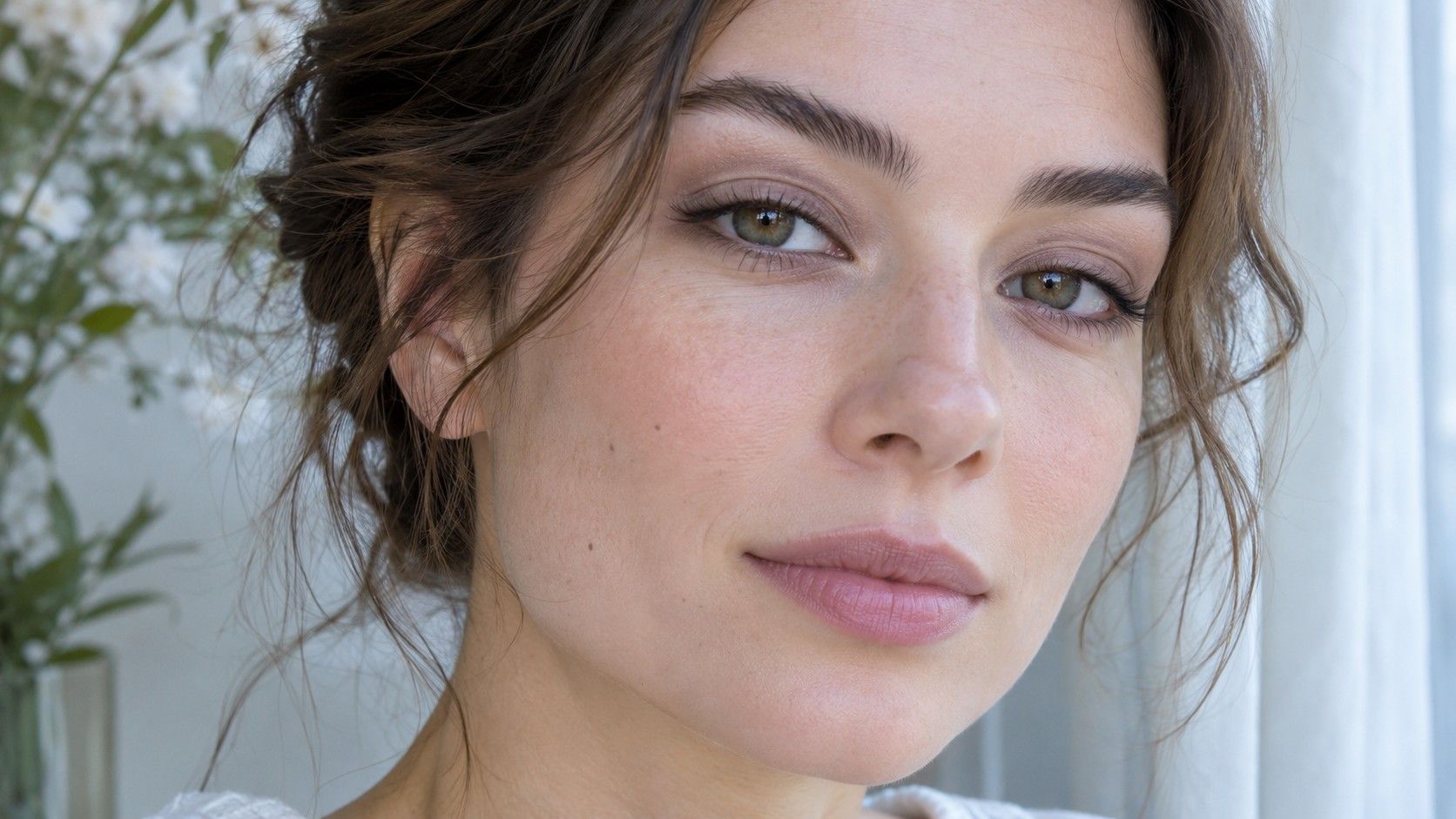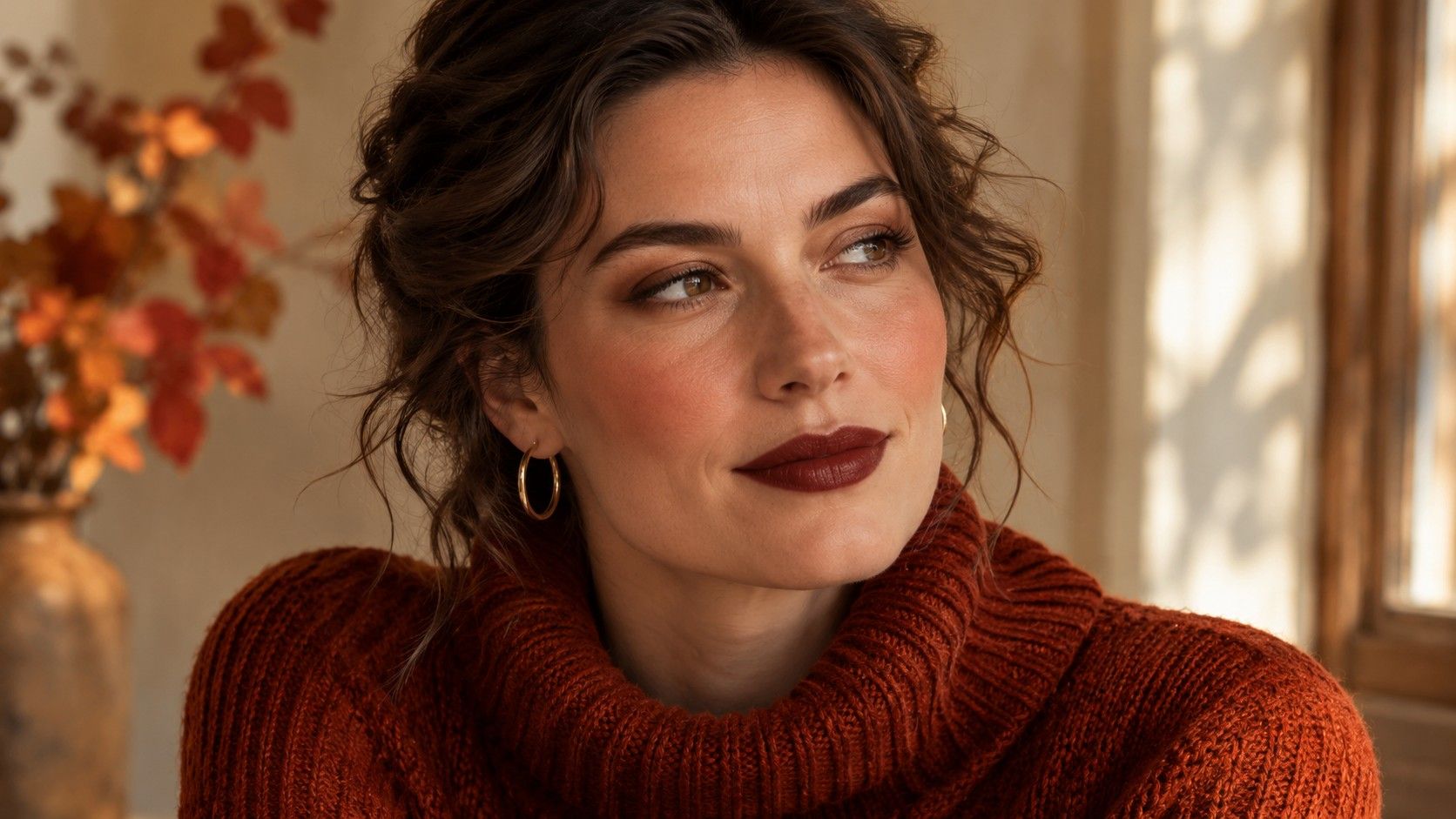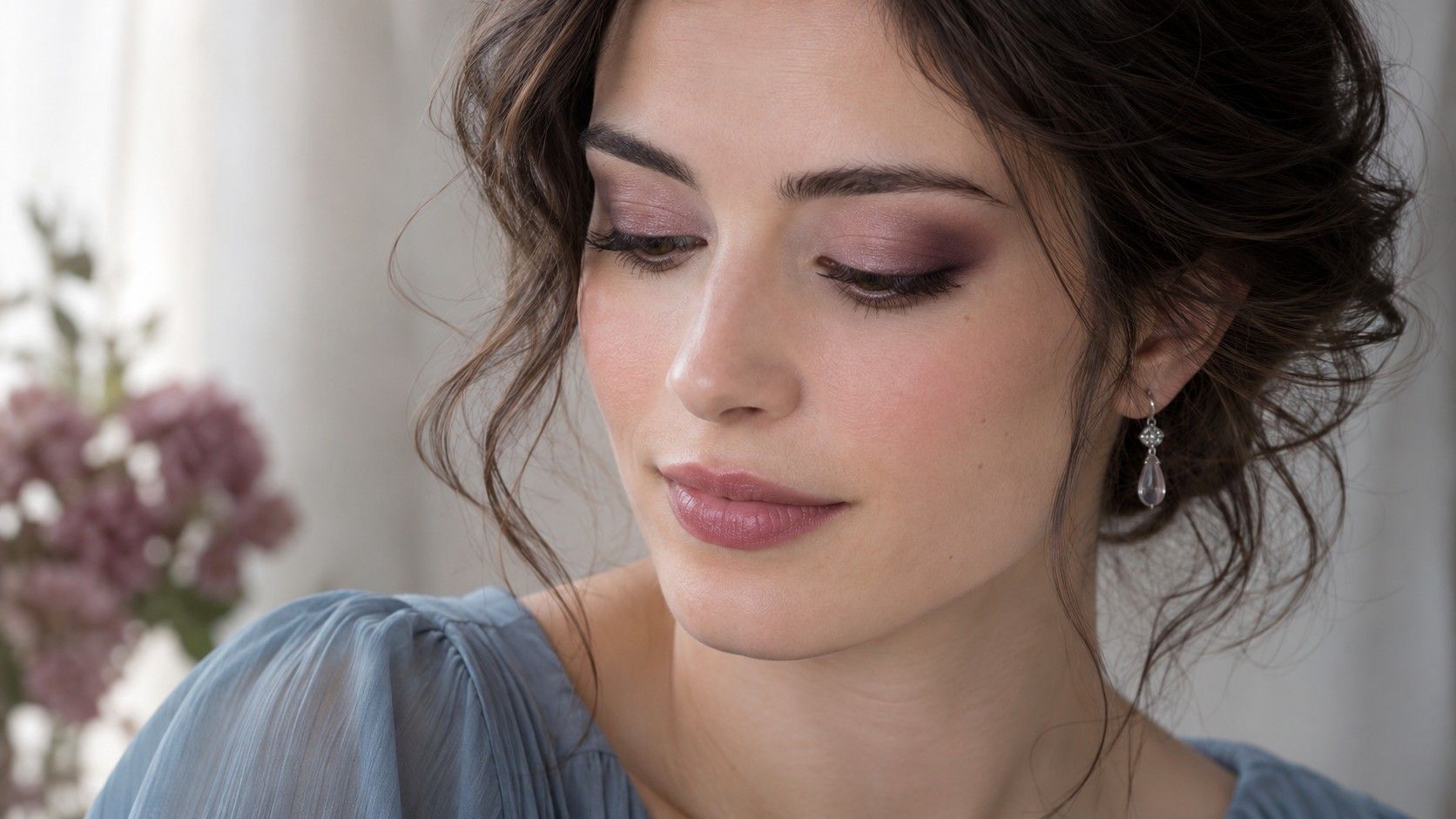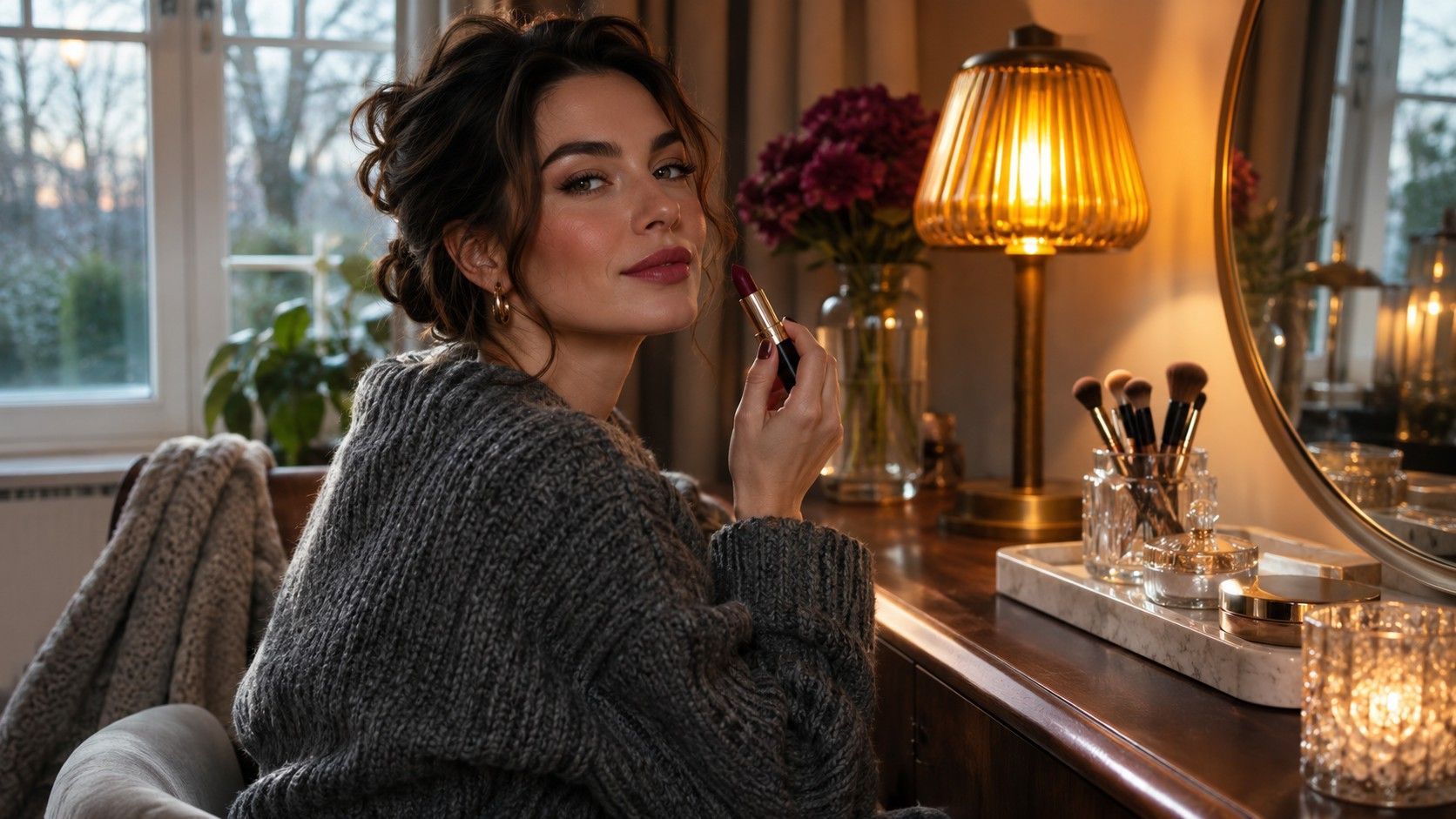
A high-contrast vs low-contrast makeup comparison is most useful when you know what you are comparing. A dark lip in your hallway and a sheer lip under a café pendant are two different looks in two different rooms. Keep a daylight version as a reference, then make one deliberate change for the evening. You can like both without needing either one to tell you your permanent color season.
Name the place, rather than the amount of makeup
An evening event does not guarantee low light. A reception might start on a sunny terrace and move indoors; a stage, a candlelit table and a restaurant with bright overhead strips can all be described as evening but reveal different details. Pick the part of the event you actually want to prepare for. For a dinner, consider the face at the other side of the table. For a group photo, leave room for the much brighter light of a flash or phone.
When you are deciding between a muted version and a stronger one, define what “stronger” means on your face. A deeper lip beside unchanged skin is a change in depth. A cleaner, more colorful berry instead of subdued rose changes intensity. Shiny gloss may pull attention without making the lip color darker at all. A crisp line can stand out even when its color has barely changed. Name one effect before making the switch, especially if an event has limited time for makeup adjustments.
Write down an aim that refers to the occasion. “I want the lip to be visible across the table” is specific. “I need to look higher contrast” is difficult to check, and it invites changing everything at once. If the intention is just to enjoy a particular lipstick at dinner, that is adequate on its own. No face measurement has to justify a preference.
Keep a daylight reference you can actually repeat
Put on the makeup version that already makes sense in your everyday clothes. Near an indirectly lit window, note what you see before adding anything: brow shape, shadow edge, blush placement and the approximate strength of the lip. Use a full-face mirror rather than a close inspection of a single eye. A face that reads as soft at a normal distance can look sharply detailed under the magnifying mirror. Both are observations, but neither alone describes an outfit across a room.
Take a photo only if it makes the comparison easier. Hold the phone at a steady height and distance, avoid turning on a face filter, and photograph your reference again after changing the makeup if the light has visibly shifted. A memo with the two lip products and which brush you used may be more useful than a before-and-after image you cannot reproduce next week. Keep ingredients and other unrelated details out of the record unless they matter to your decision.
When trying versions on different days, keep the basic environment similar where practical. A layer of tinted base or a newly worn bright scarf can change your impression before the evening accent enters the picture. You do not need a laboratory setup. Write “usual base and grey knit, standing in the window” rather than pretending every variable was controlled. Enough consistency to identify a useful adjustment is the goal.
Change one evening accent and look in the intended light
If a lip shade disappears in the reference, try more opacity or a slightly deeper color without also increasing the cheek color. If the eyes are the intended focus, keep the lip and base unchanged and add definition to one existing edge. In either case, try the changed version in light that resembles the destination, then take a second look by the window. The two views answer separate questions: does it make sense in the usual light, and does it still show up where you are going?
Some warm bulbs make pink or orange read differently. Very dim lamps can make a defined dark edge look more useful in a mirror and less noticeable when you step away. A few minutes of trying the look by a warm lamp at home will not predict the exact restaurant. It can still tell you when your chosen lip color feels softer than you expected and whether the stronger version feels like something you want to wear, rather than a compulsory change to match a label.
Save an easy way back. Blotting one more opaque lip may be simpler than carrying another full face of products. A single shadow edge can be softened with a clean brush if the event starts in daylight. You may find the day version already survives the intended setting. When that happens, keep it and get on with the evening. A deliberate comparison does not require a visible upgrade.
Check what the clothes add before changing the makeup again
A black lapel and an ivory shirt can create a strong frame while the eyes and lips remain softly colored. A pale close-neck top can make the same lip appear to be the strongest decision in the look. Neither observation automatically tells you which makeup belongs to your season. It tells you how this outfit and face read together. Check the top or jacket in the actual combination before adding contrast to the face to compensate for an effect that is already present.
If there is a bright collar, scarf or a vivid patterned jacket, move it into and out of the mirror while keeping the makeup constant. Notice where your eye goes, and whether that is desirable for the occasion. A richer lip can align with a jacket's stronger color without matching the jacket shade. Or it can compete with a colorful neckline you wanted to be the whole point. An ordinary wardrobe test is likely to answer that more directly than a guide to season labels.
Think about the whole evening rather than the photo taken on arrival. A coat comes off, glasses may go on and a matte lipstick may fade after a drink. There is no need to design three full replacements for these ordinary shifts. Check the phase you care most about, keep a simple baseline and choose one small adjustment that can travel between situations without making the rest of the look feel unfinished.
Keep two useful notes, not a before-and-after ranking
Save the versions by purpose: “window reference, soft rose and familiar brow”; “dinner, same brow and one deeper lip layer.” If you decide to reproduce them for a different occasion, the note separates what you changed from what was already working. It also gives you a quick way to undo the new accent if it turned out to be less comfortable or less practical than you hoped.
After you have worn the evening version, note what mattered in practice. Did the change show up at conversation distance? Did you prefer the daylight lip in photographs? Did you remove the darker look after ten minutes because you kept thinking about it, or did you wear it happily for hours? A short note about ordinary use is more useful than deciding the lighter or darker design was supposedly more flattering at all times.
Keep the actual distinction modest. You can prefer softer brow definition in daytime and a sharper line after dark, or the reverse. If both looks work unchanged, keep one. If a change earns its place for a specific setting, record it without assuming a new season, contrasting every feature, or replacing products you are already glad to use.