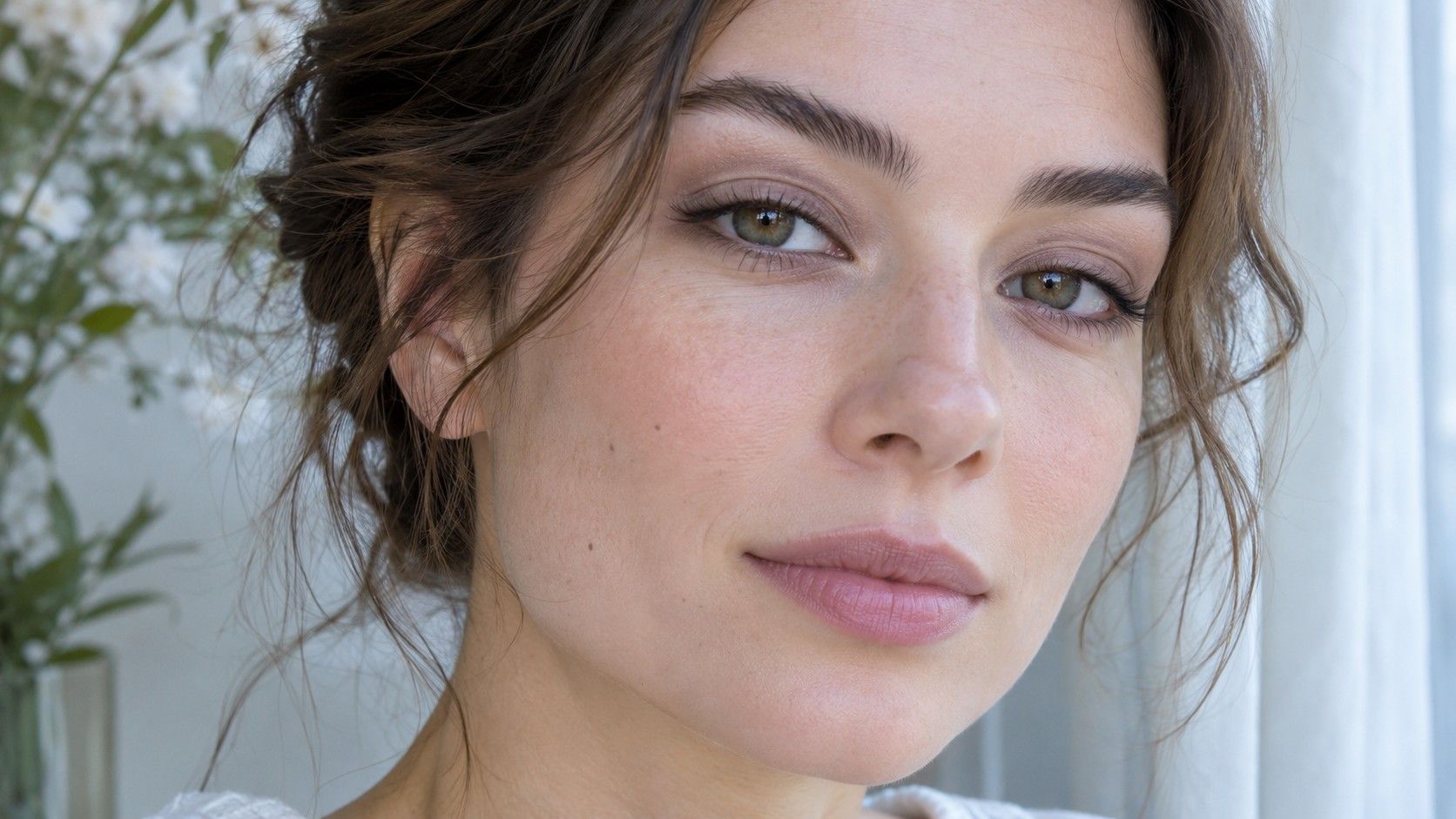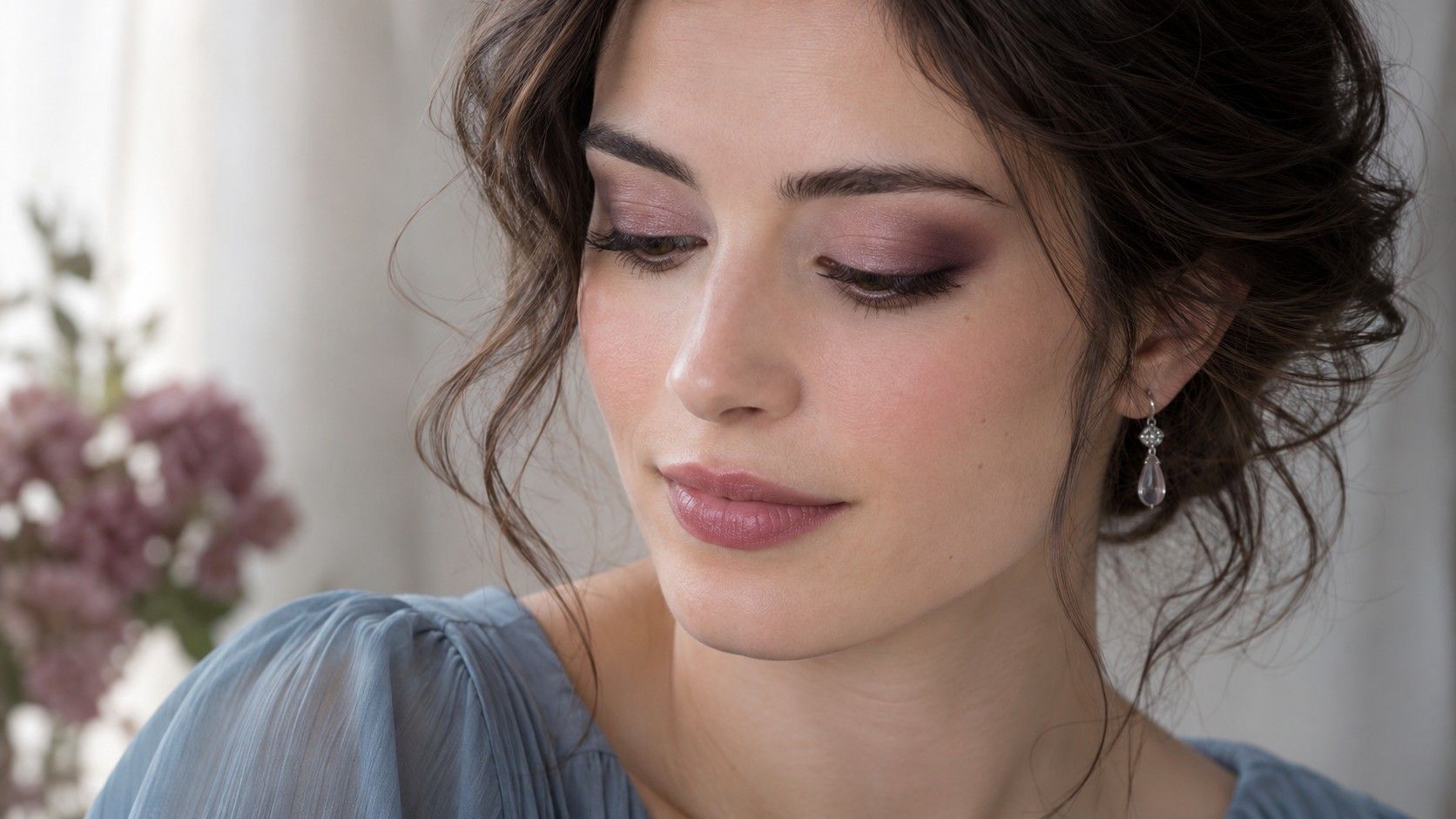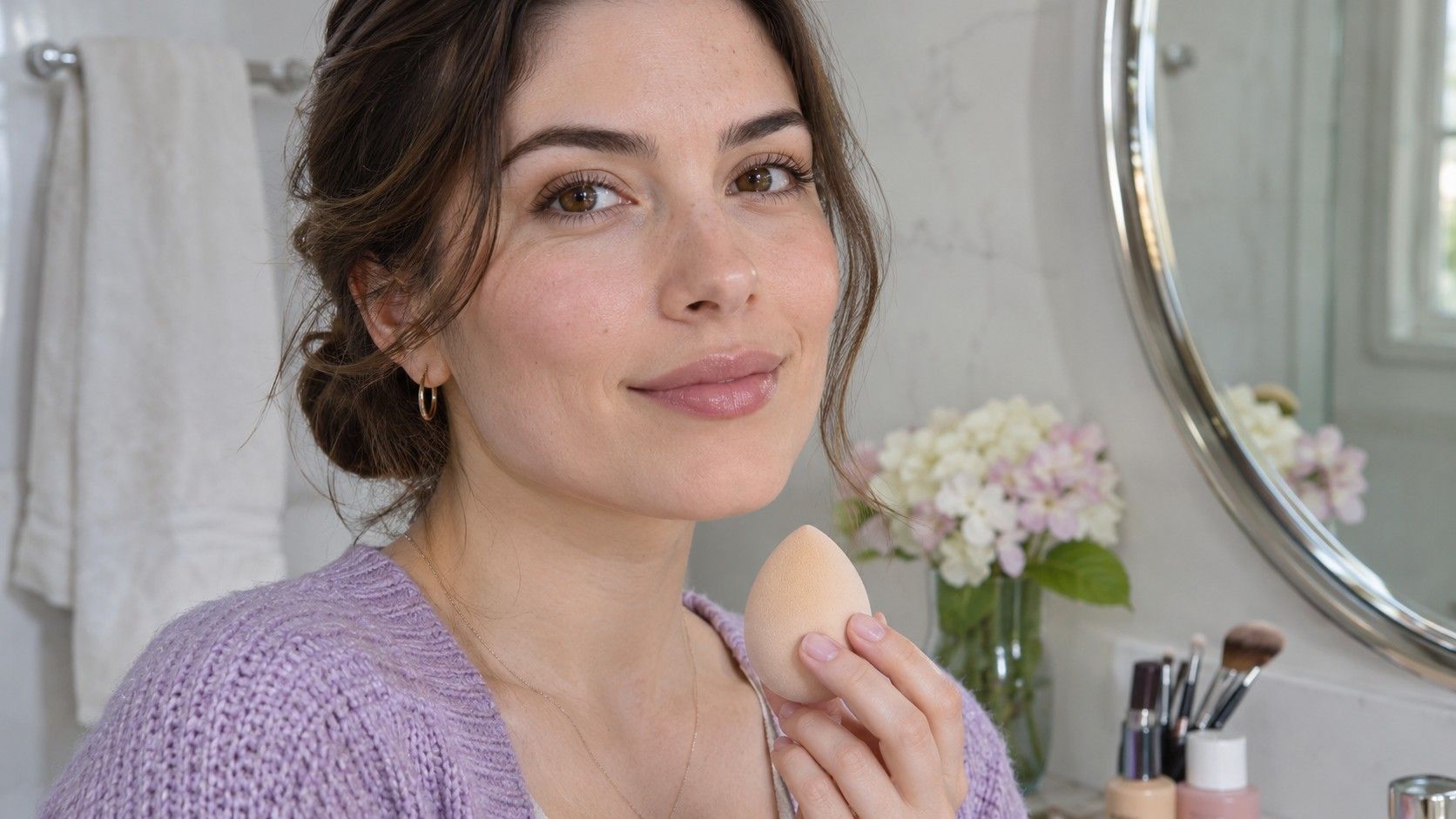
A rose blush looks balanced on your hand but reads purple over the tint you wear to work. Meanwhile, the peach in the same drawer seems warmer in the compact than it ever looks on your cheek. If you use a neutral undertone as a styling reference, that difference is more useful than a generic list of flattering shades. Compare the colors over the complexion makeup you actually wear before deciding which one deserves a place in your routine.
Keep the normal base constant
Choose an ordinary base day, not the day you are trying a new primer and a sample foundation at the same time. Apply the usual amount of foundation or tinted moisturizer, the concealer you normally use around the nose, and powder only in the places you typically set. If you do not normally wear complexion makeup, you can start with bare skin and repeat the comparison on a day when you do wear a base. The point is to reproduce a real condition, not to establish a professional testing setup.
Let the base reach the stage at which you usually apply color. A cheek that still feels tacky can grab a brush differently from a cheek that has been powdered, and a liquid product can disturb a fresh layer if it is rubbed over it. Keep the sequence the same for both samples. If one side of the face always gets an extra pass of concealer, take that into account rather than treating the two sides as identical surfaces.
Make a small note about the setup: the tint you wore, whether you set the cheeks, and whether you used a brush or fingers. Those three details make the comparison much easier to repeat. You do not need a photograph of every step. A reference matters because it can explain why the same shade seemed much easier to place last week, when you may have applied it over a different finish or over no tint at all.
Compare two colors with similar strength
Start with a bounded choice. Two muted blushes with roughly similar color payoff, one dusty rose and one restrained peach, can tell you more about relative warmth than a translucent rose against a vivid orange. If the orange attracts all the attention, you are seeing a difference in amount of visible color as well as a difference in hue. Neither sample has failed, but that test does not answer which of two quiet colors sits more naturally over this base.
Use small amounts and keep placement similar. A wash forward on the cheek and a concentrated patch high near the temple change the shape of the effect as much as the color. Separate clean brushes or cleaned fingertips help you avoid carrying one product into the other. For pressed formulas, matching a number of taps may be a starting point, not a guarantee: one pan may release much more pigment than another. Stop when both are similarly visible rather than making either shade stronger just to count the same motions.
A split-face test works if you can keep the light reasonably even. Stand facing the window instead of putting one cheek directly next to it. Then turn your face slowly both ways. If one candidate seems brighter only when it is nearer the light, compare the tones again after swapping sides on another day. You can instead wear one candidate per day when your cheeks differ enough that a side-by-side view feels misleading.
Note a base cast without diagnosing undertone
Sometimes the product you suspect is the blush is actually the layer under it. Look at an uncolored part of the cheek near the edge of the application. Does the tint itself look warmer or more muted there than it does near the jaw? The cheek can naturally look different from the jaw, so treat that observation as a clue about how the whole application reads rather than a declaration that the base is wrong.
For a second check, compare one familiar blush on two ordinary days, once with the regular tinted base and once without it. Keep its placement and approximate strength stable. A peach that is comfortable over bare skin may turn louder over a noticeably yellow-looking base. A rose that seemed gray on a covered cheek may be quite clear without that layer. These are observations about two combinations, not evidence that you have changed your undertone.
Texture can also give the impression of a color shift. A cream placed on a dry patch can read darker at the edge because more product remains in one place. A reflective finish can look pale where the light hits and stronger just beside it. If the effect disappears when you turn toward a different lamp or blend the same product more evenly, do not rush to buy a new shade. Write down what you saw and test the simplest explanation first.
Choose by the complete face and use case
Once you have a clearer first choice, put it back in context. Add the lip color you planned to wear and look at the whole face from about the distance you would stand in an ordinary conversation. A slightly cool blush might make a cool rose lip feel coherent; the quieter peach may leave more room for a strong lip to be the focal point. Neither needs to win every pairing. The question is which combination solves the look you are dressing for today.
Check the light where the appearance will matter. Facing window light helps with the first comparison, but the warm lamp above a restaurant table or the pale light by a workplace bathroom mirror can change which difference is noticeable. If your two candidates look nearly identical at the distance you normally see them, ease of application may matter more. Pick the one that needs less fuss to spread evenly or is easier to refresh without disturbing the base.
Before choosing solely from a fresh application, wear the combination through what you actually do: a walk, time at a desk, or a couple of hours with glasses resting on the cheeks. If a cream moves the foundation in exactly the area you tend to touch, that is a reason to reserve it for another use. It is not a reason to eliminate every cream or every color in that shade family.
Keep the conclusion narrow enough to reuse
When you look up makeup colors for neutral undertones, you will find suggestions in several directions. Make your own record more useful by naming the condition and the decision. For example: dusty rose over the usual tinted base with cheeks left unpowdered; muted peach on bare-cheek days; test both again if the base changes. A note like that outlasts an abstract rule about whether neutral undertones can wear a given family.
If the regular base is being replaced, change it separately before revisiting the whole drawer. Wear the new base at your usual coverage, give your first-choice cheek color a normal trial, and recheck a second shade only if something now looks off. You may find that the result travels from one base to the next. If it does not, the comparison has already shown which part of the routine to look at before replacing products that still work elsewhere.
Keep the pairing that feels easy to use and looks the way you want. One repeatable combination is more useful than a verdict on all warm or cool shades, and a color that suits a different base or another look can stay exactly where it is.