A muted rose lipstick can feel crisp in a satin finish and oddly flat in a powdery matte. That difference does not necessarily mean you need a brighter pink. If you have been looking at soft winter makeup, test the way a product reflects light before changing its color. Pick a lip or cheek product you can already wear comfortably and compare it with one nearby alternative. The useful result is a finish you like in ordinary light, not a verdict about which season you are.
Keep the source label and its limits clear
Start with the source that used the words “Soft Winter.” Some color systems name this as a separate palette; others do not. A muted berry in one guide and a fairly saturated cranberry in another might both carry that label. If you have a report, compare your makeup with the actual palette examples it gave. If a video was your only source, record a description such as “cool-looking rose with some gray in it” rather than trusting the label to mean the same thing twice.
It helps to give “muted” an ordinary job before going to your makeup shelf. Perhaps you want a berry that does not look like the most saturated thing in the room, or a rose cheek that is noticeable without looking vivid next to a gray sweater. Those are visual preferences you can check yourself. A photo of a lipstick that looks too flat does not prove you were assigned the wrong season, and adding a little sheen is not a way to identify your skin tone.
Keep the setting stable for a first pass. Wear the base you generally use, stand in your usual place near indirect daylight, and put on a top you know. A strong blue collar can compete with a berry lip, while a much paler neckline can make the same lip stand out. Neither response is inherently wrong. Keeping the clothes constant gives you one less mystery to untangle if the second swatch looks surprisingly different.
Compare finishes within a similar color family
Look for two colors close enough to give finish a fair hearing. A muted plum matte beside a shiny orange-red changes so many things that a preference tells you little about either finish. A pair of similar berry shades is more useful, even if one is a little darker. Note that small difference. Lip color underneath a sheer product can change the visible result, so use a normal application on the lips rather than assuming a thick arm swatch will match.
Try each product on its own, without a strong liner or lip gloss layered over it. Check the first look, remove it as you normally would, and let any visible staining settle before trying the second. If the first product leaves a stain that will change the second shade, compare on a different day. There is no need to scrub or rush for a perfect side-by-side. You are testing how the two options wear on you, not producing a controlled product demonstration.
If you own only one color you like, you can still examine the role of reflected light. If it works with a lip product you already use, try a very small touch of clear lip gloss over the center of the lip and leave the edges alone. That is a check on the effect of added sheen, not a prediction of how a different satin lipstick would apply or last. If it is the changed texture that bothers you, keep that separate from your reaction to the color.
Watch for shine rather than assuming more brightness
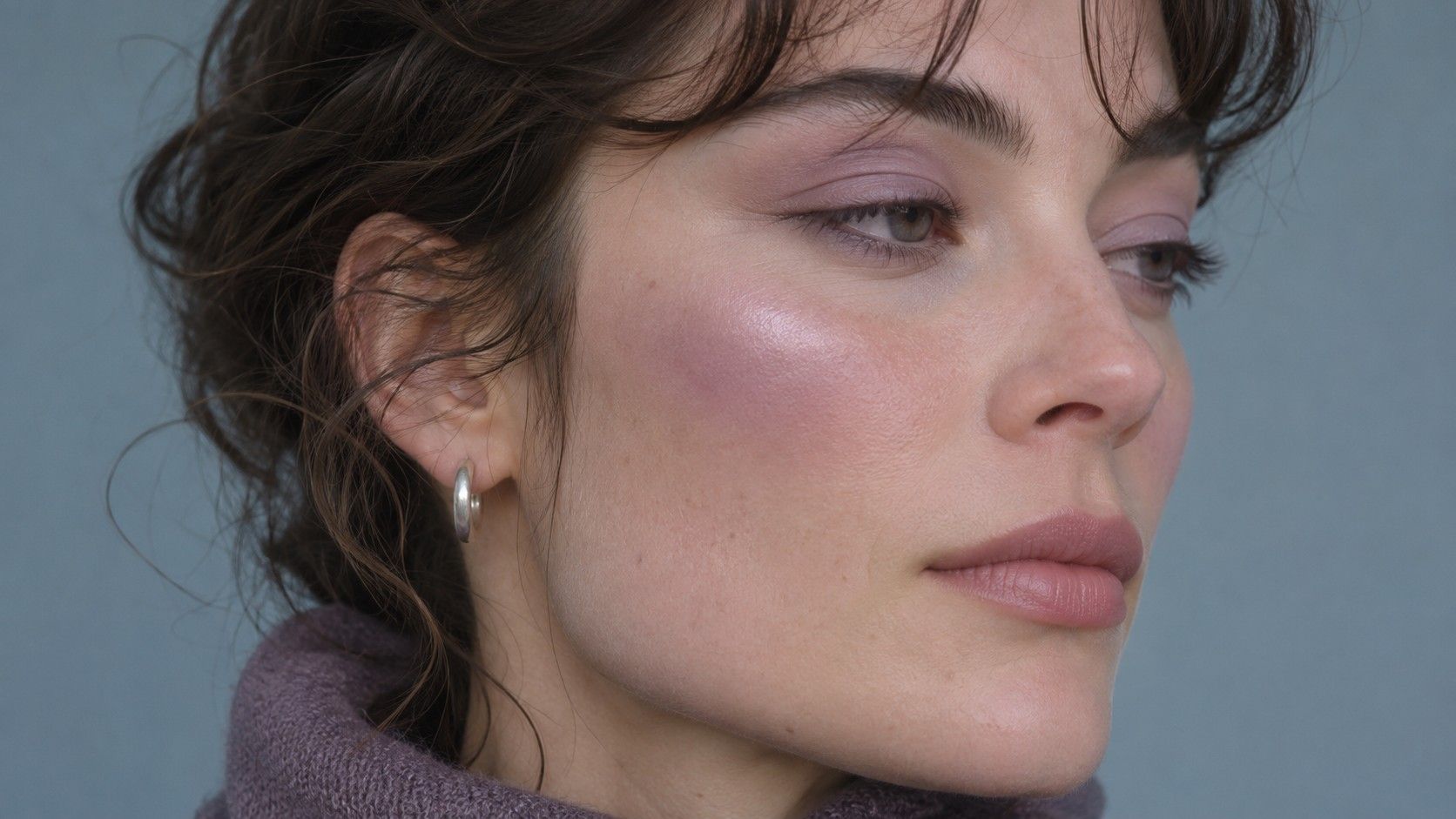
Turn your head a little in indirect window light and see where the strongest highlight moves. A satin plum may retain the same quiet color when you face forward but show a streak of light when you turn. A good question is whether you still notice the plum, or whether the highlight takes all your attention. Reflection and stronger pigment are different ways for a lip to draw focus. Buying a brighter berry may do nothing for someone who actually wanted a gentler reflection.
Look once in the place where you normally finish getting ready and once in the light where you will spend the day. Under some overhead lighting a dry-looking matte can feel more severe; in a bright room a little shine may turn out to be more conspicuous than you expected. If you take pictures, use them as reminders and keep the angle and distance consistent. A phone may treat exposure or color differently even when the product has not changed.
Make the comparison from normal speaking distance before inspecting the edge. Up close, it is easy to decide based on a fine patch of texture that disappears as soon as you stand up. If you want that small detail corrected, do so, but do not give it an outsized vote in a finish decision. Ask whether the makeup as a whole looks flat, whether the actual lip looks flat, or whether you simply dislike how one product photographs.
Balance the lip and cheek finish
Keep the lip you prefer and return to the cheek gently. If a satin lip provides a small moving highlight already, a matte or low-sheen cheek can let the lip remain the more defined feature. It is not a ban on luminous blush. Before adding any product, turn toward the light with the foundation or moisturizer you already have on. There may already be sheen on the cheek, and an added reflective layer can have more effect than the underlying blush color.
For a matte lip you like, test a small amount of a softer-looking cheek finish against the complete outfit. If both the eye and cheek also have strong reflect, the matte lip may recede more than intended. Take one addition away rather than making the lip brighter to compete. If you want the cheek to stay quiet, placement or the amount of product can be a more practical adjustment than buying a different lipstick.
When a combination works, describe what each area contributes. “Low-sheen cheek with satin berry; the lip is the clearer color” is more useful than saving two product names alone. Those details help when a product runs out, because you do not have to locate the exact same pair. You can compare the finish of a replacement without expecting it to behave exactly like the original formula.
Choose a finish that survives normal wear
Check how the preferred finish looks after doing something routine, such as walking to a café, drinking water or talking for a while. A product may look attractive five minutes after application but lose the sheen you liked. Another can remain visibly glossy while the lip color settles at the edges. Timing depends on the formula and what you do, so compare the results of your own ordinary wear rather than assuming that every satin or matte behaves alike.
Separate what you like from what you are willing to maintain. If the satin version has the better initial look but needs a touch-up before an afternoon appointment, that can be an acceptable choice for dinner and an impractical one for work. If a finish requires you to carry a separate gloss you routinely forget, consider whether a quieter option you already own solves the everyday problem more reliably.
End with one repeatable combination and a clear alternative. You might keep a satin rose for days when you want a little light on the lips and a matte version for days when you prefer a defined, quiet edge. If a similar hue with two different levels of shine answers the original question, there is no need to replace the rest of the palette. Your note can simply say which finish you reach for and where you usually wear it.