A rose blush looks promising in its pan, then turns into a bright patch on your cheek. If you use True Summer makeup suggestions, it is tempting to decide that this must be the wrong kind of rose. That conclusion skips a useful question: would the same product look different with less pigment on the brush? Compare amount before shopping for a replacement. The goal is a cheek color you enjoy wearing, not a test that proves or disproves your season.
Begin with a small amount over your usual base
Use the foundation, tinted moisturizer or bare skin you normally wear. A blush that sits on an unfamiliar full-coverage base can look more pronounced than it does in your everyday face. Keep the base consistent for this comparison, including any powder you normally apply before blush. If you switch both the cheek color and the surface beneath it, you will have two possible explanations for the difference.
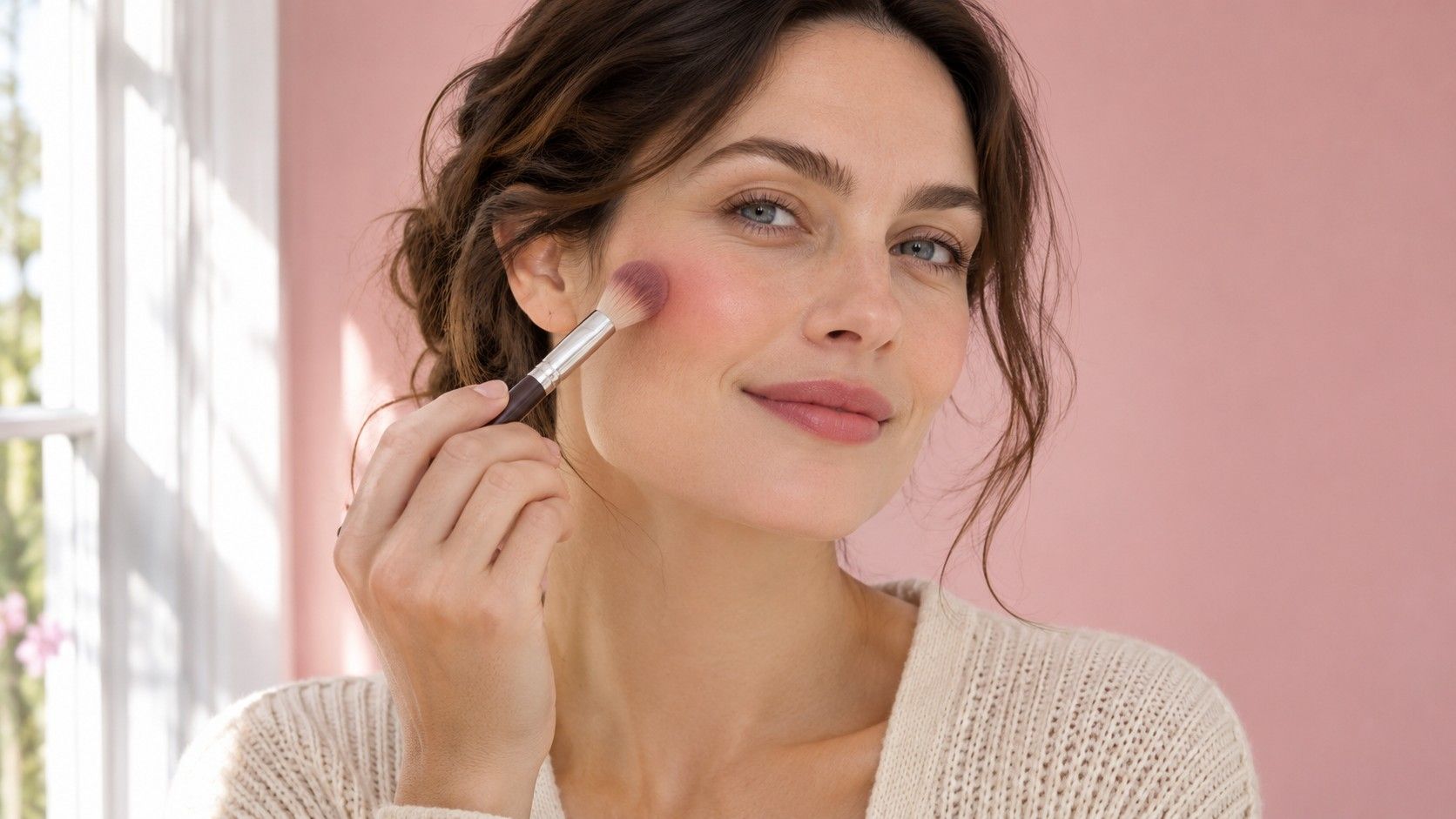
Take a small amount of your rose blush, then distribute it on the brush or applicator before touching your face. With powder, that can mean tapping away loose excess rather than pressing a heavily loaded brush straight onto the cheek. With cream, start with a small dab on the tool you normally use and spread it before adding another. There is no useful universal number of taps: a dense brush and a loose brush can deliver very different amounts.
Look for a faint first layer, not an immediately finished cheek. A highly pigmented rose can still produce a light effect, while a sheer one may need several layers to become visible. If a thin application leaves separate speckles or catches on one patch, record that as a texture or application problem. Do not keep adding color simply to make the patch match the rest of the cheek; that makes the original question harder to answer.
Separate a strong application from a wrong hue
Once the first layer is even, add a little more to the same general area only if you want it. Notice what changes. Does the color become a stronger version of a rose you like, or does a quality you dislike become obvious, such as more orange, violet or brown than you expected? Both observations are useful, but they lead to different decisions. The first may call for a lighter hand. The second may lead you to compare a different shade.
Think of hue and strength as separate questions rather than separate physical properties you can measure perfectly at home. A thick layer can make an underlying color easier to see, and a very sheer layer lets more of the base or skin show through. That interaction is precisely why the color in the pan is not a reliable preview of every application. Keep your conclusion local: “I prefer this shade applied lightly over this base” says more than “all cool roses work.”
If a second blush is available, compare it only after you understand the first. Give the newcomer a similarly modest application, rather than matching the number of brush strokes. Two strokes of a soft powder may be nothing like two strokes of a dense cream. You are comparing the appearance you might actually wear, not awarding points for identical motions. A preferred second product does not make the first unusable for a different look.
Compare both cheeks without changing the rest of the face
A two-cheek comparison can help if one side carries a lighter version and the other a stronger version of the same rose. Keep the occupied area broadly similar. One tiny bright circle and one broad transparent wash introduce placement as another variable. Decide whether you want the cheek color mostly high on the outer cheek or closer to the center, then use that location for both sides.
Faces are not mirror images, so do not expect the two sides to make a laboratory comparison. A window on your left can light one cheek more strongly, and you may naturally apply more pressure with your dominant hand. Turn so the light reaches both sides more evenly, then view each side in turn. If you are still unsure, try the lighter application on the opposite side another day. A repeated preference is more useful than an argument with a single photograph.
Leave lipstick, eye makeup and clothing unchanged while you make this particular choice. A strong new lip can make a moderate cheek seem too busy even when the blush itself is fine. If you normally wear a lip color, put on that familiar one before deciding whether the cheek needs more pigment. For a bare-lip day, judge it that way instead. Your whole face supplies context; the blush does not have to look complete as an isolated mark.
Look at the color in ordinary daylight
Step back from a magnifying mirror and look in a normal mirror at roughly conversational distance. Close inspection is good for finding an uneven edge, but it can exaggerate the importance of a small patch that nobody notices when the whole face is visible. Check whether you see a clear boundary to the blush or a gradual transition. You may prefer a visible blush statement, but that should be a choice rather than an accidental deposit of pigment.
Use ordinary, indirect daylight if it is available. Strong sunlight, a shaded face beside a bright window, and a warm bathroom bulb are different viewing conditions. You do not need to find perfect light or buy equipment. Choose a familiar place where your face is easy to see, make the comparison there, then also glance at the result where you will wear it. An office or evening restaurant may make a different intensity feel appropriate.
Notice finish as well as color. A reflective blush can look pale when the light catches it and deeper as you turn away. Matte powder can emphasize a different surface texture from a cream. If your objection appears only at one angle, changing the rose shade may not address it. Try less product or a different finish only if you already have one to compare. A photo can preserve a rough reminder, but automatic exposure and processing make it a weak judge of small color differences.
Choose the amount you will actually repeat
Keep the version that fits the rest of your routine. If a faint first layer gives you the look you want, there is no need to build until the cheek resembles an example image. If a stronger cheek makes an otherwise quiet face feel finished to you, the True Summer label is not a prohibition. Seasonal palettes can offer starting color suggestions; they cannot decide how much makeup you want to wear on a particular day.
Write a short practical note rather than a verdict on your coloring. “Usual base, loose brush, one light layer; add a little at the outer cheek” is something you can repeat. “Rose blush is wrong” throws away the distinction you just found between application and color. If you change foundation or switch from powder to cream later, allow the preferred amount to change as well. You have not contradicted yourself by adjusting a routine.
After a few ordinary wears, decide whether the product earns its space. An attractive shade that demands more precision than you want every morning may not be your best everyday blush, even if you can make it look good once. Set it aside for another occasion, use a familiar alternative, or stop at the lighter layer. You do not need a new season result or a new palette to make that small, sensible decision.