A warm peach blush and a golden brown bronzer can look compatible in their pans yet make a cheek feel crowded when both are on. For warm autumn makeup, the useful question is not whether you have picked two warm colors. It is whether one puts color where you want it and the other adds something you would miss. Start with the makeup you own and one ordinary outfit, then build only as much of the pair as that look needs.
Decide what you want each product to do
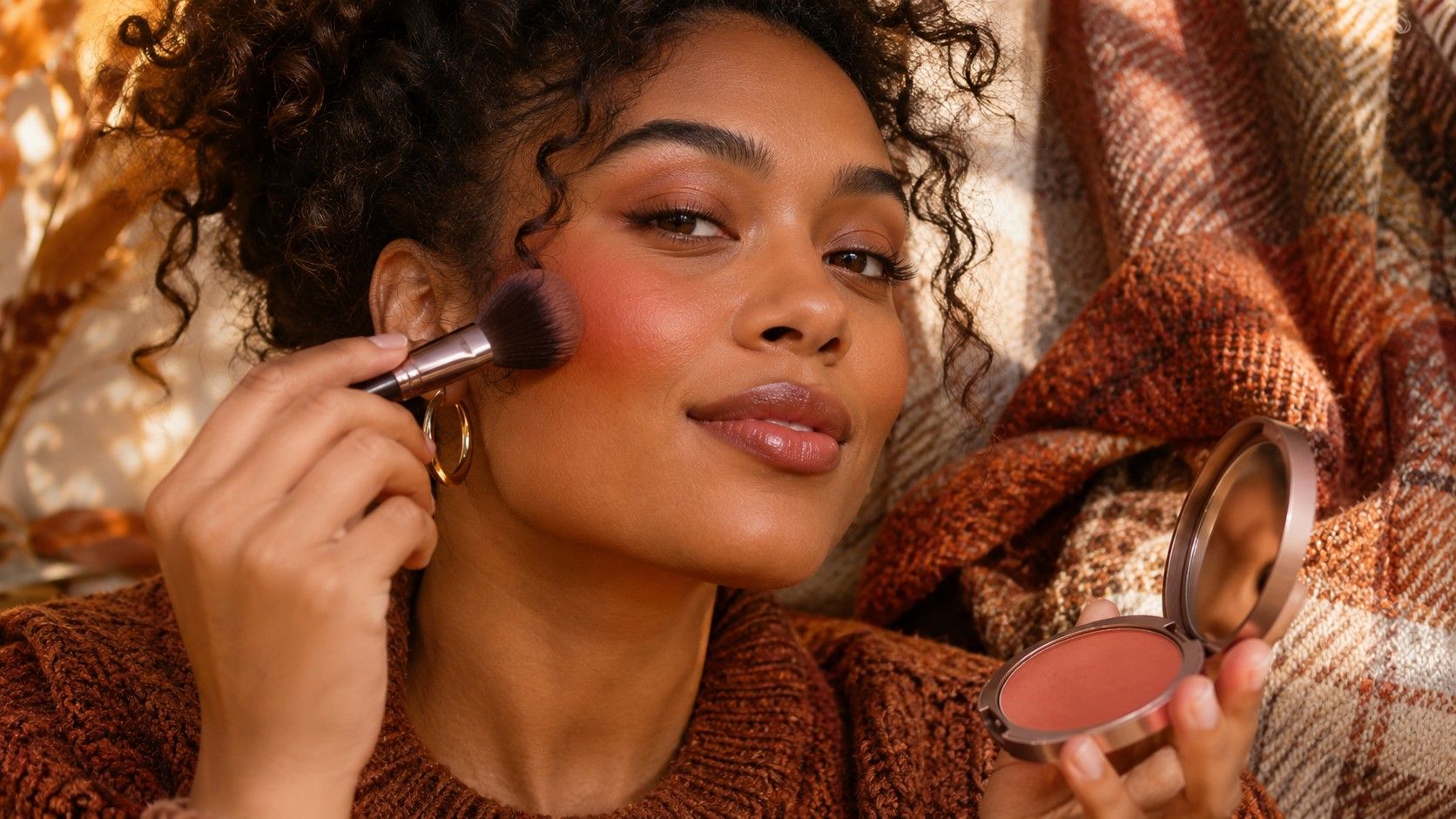
Give each product a job before picking up a brush. Blush can be the part you actually want to notice when you look at the finished face. It might be a peachy note beside a soft cream shirt, or a deeper brick-rose accent with a plain brown sweater. Bronzer can give a separate, broader impression of warmth around part of the face. It can also be the featured color if that is what you prefer. Neither product has to follow a placement diagram, and neither is compulsory because a palette guide included it.
Try saying the job in ordinary terms. “I want the upper cheek to show a little color while the rest of my face stays quiet” is something you can check in the mirror. “I need all my products to be Warm Autumn” gives you no way to tell if the second compact achieved anything. If you find yourself reaching for bronzer out of habit, look at the face after blush first. The color may already be as warm and as noticeable as you wanted.
This is separate from contour. If the effect you want is a specific shadow just below the cheekbone, adding golden color all over the cheek is a different decision and might not produce that effect. If you like the bronzer precisely because it leaves a visible bronze band, keep that as an intentional option rather than calling it a shadow. That distinction helps when you compare products with similar names and very different appearances on the face.
Check the two colors beside your normal base
A pan lets you see what is in the compact, not how it sits over your everyday base. Use the same foundation, tint or bare-skin routine you actually intend to wear. Test a little of each cheek product separately on that background before layering. Note which reads as a clear cheek color, which looks largely brown, and whether either becomes brighter or more reflective than you expected. The shade that looks quiet on the back of a hand can draw your eye once it is near your usual brow and lip colors.
If one product is cream and the other is powder, watch the layers as well as the shades. If an edge turns patchy after you add the second product, check the first product alone on the other side before deciding the two colors clash. A sticky zone under a dry powder or a brush that moves the layer underneath can change the result. You may care less about how the combination looks in a pan than about whether it stays even with your application method.
Compare strength at a plausible amount. A dense swipe of bronzer next to a lightly tapped blush only tells you what those two amounts look like. Start both lightly enough that you can see their edges, then raise one if it disappears. If the blush has more color than you need but you like its direction, use less before replacing it. If the bronzer has the exact warmth you were after but the shine is what catches your attention, record that distinction. Warm and shiny are not the same preference.
Keep placement from turning into one large warm area
It is easy for a generous cheek sweep to become a single stripe once you layer over it. Try starting with blush in the part of the cheek you want to notice, then stop and step back. If the blush looks like a small, clear accent, keep that location in mind. Add bronzer in a different spot that would benefit from warmth, such as a light touch at the temple, instead of automatically taking the brush back through the same patch of cheek.
Overlap is not a mistake if the color and transition are what you want. To find out, let only the edges meet on one side while keeping them apart on the other. Look in the mirror from straight ahead and then turn slightly. If all you see on the layered side is one more intense brown-orange patch, you have learned how much overlap you like. If the transition works, there is no need to wipe it off simply because a tutorial said the products should never touch.
Take account of what is already around that area. The arm of a pair of glasses can make a line at the temple more noticeable. A hair part that covers one side may leave the other side exposed. A warm patterned collar can supply plenty of color underneath both cheeks. Try the hairstyle, glasses and top you are leaving the house in before matching the face to a demonstration that used different clothes and a different camera angle.
Compare the face in a practical setting
Check the result once standing back from a mirror. Move from the room where you applied it toward indirect daylight if that is easy. Then look in the kind of light where you will spend time, whether that is an office, a dining room or a shaded walk. The aim is not to find a single correct lamp. It is to see whether the warmth you liked at the dressing table is still doing what you wanted in an ordinary setting.
Try leaving one cheek with blush and bronzer and one with blush alone if the difference is difficult to see. Look for the particular effect you wanted, not for a winner at all costs. Does the temple now relate better to the rest of the face, or are you mostly noticing a bright edge? Does the unbronzed side actually look unfinished to you, or just simpler? A quick photograph under the same conditions can be a memory aid, but use the mirror as well. Automatic exposure and white balance can shift small color differences between two pictures.
Give the look a fair amount of wear before turning it into a shopping instruction. In a real routine you may put on a coat, change rooms and look up from a desk rather than inspecting both cheeks at arm's length all day. If you only notice the bronzer when you deliberately search for it, that can mean either it is a pleasing quiet detail or you simply do not need it. Write down what you prefer instead of giving every barely visible change a score.
Use one product when the second adds no clear benefit
If blush alone already gives the cheek the color you wanted, leave the bronzer in the drawer for that look. If your aim was a broad warm impression and you prefer the bronzer alone, skip the blush. You might like both with a plain dark top and only one with a rust-colored top. Keeping an option for two different occasions makes more sense than forcing one pair to work in every outfit.
When a combination does work, note the decisions that made it repeatable: “one light blush application in the center of the cheek; leftover bronzer at the temple; no overlap.” Replace those details with your own locations and amounts. The important part is that you can tell which step to leave out next time. A note that merely says “Warm Autumn cheeks” cannot tell you whether you wanted a rosy accent, a little warmth or less shine.
Before buying a replacement, identify the missing job. A new bronzer will not necessarily fix a blush that is going on unevenly, and a more orange blush is not required if the cheek color is already easy to see. If you do shop, look for the effect you could describe in your normal routine, with realistic placement and a strength you can control. There is no need to expand a two-minute makeup decision into a coordinated set when a single product does the work.